Bridgehampton New Builds Versus Historic Farmhouses
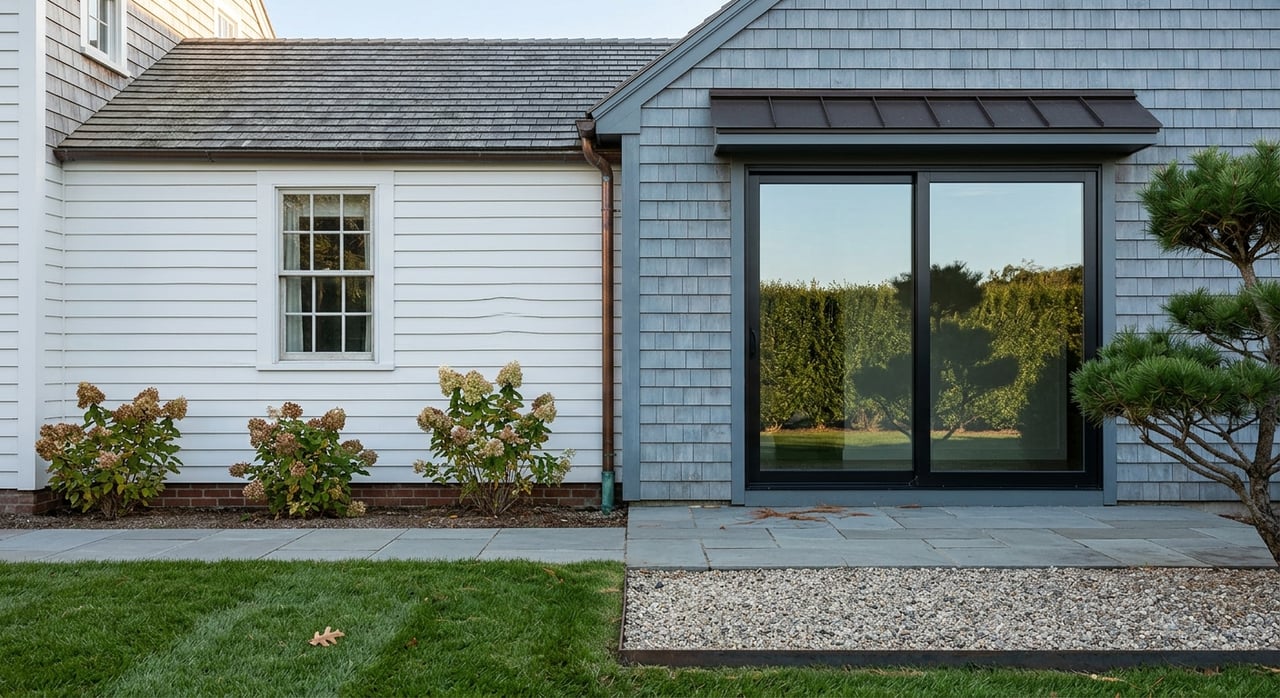
If you are choosing between a new build and a historic farmhouse in Bridgehampton, you are really choosing between two very different ownership experiences. One offers modern systems, a current-code baseline, and a turnkey feel. The other offers architectural character, a deeper sense of place, and a connection to one of the Hamptons’ most recognizable historic landscapes. This guide will help you weigh the tradeoffs clearly so you can decide what fits your goals best. Let’s dive in.
Bridgehampton is not a place where history sits quietly in the background. It is a hamlet within the Town of Southampton with a visible architectural legacy that still shapes the look and feel of Main Street and the broader area.
Town materials trace Bridgehampton from its early agrarian roots into its later role as a summer destination. They also point to surviving Federal, Greek Revival, Victorian, and Classical Revival buildings, along with landmarks like the Triangular Commons, that continue to define the hamlet’s identity.
That local context matters when you compare housing options. In Bridgehampton, buying a house is often about more than square footage and finishes. It is also about whether you want a home designed around present-day living from day one or one that carries historic fabric and a distinct architectural story.
For many buyers, the strongest case for a new build is predictability. New construction in New York is built under the statewide Uniform Code and Energy Code, and the state says the 2025 versions became fully effective on December 31, 2025.
That does not guarantee lower total ownership costs, but it does give you a newer operating baseline. In practical terms, you are usually looking at newer systems, current code compliance, and a home planned around modern comfort, efficiency, and day-to-day function.
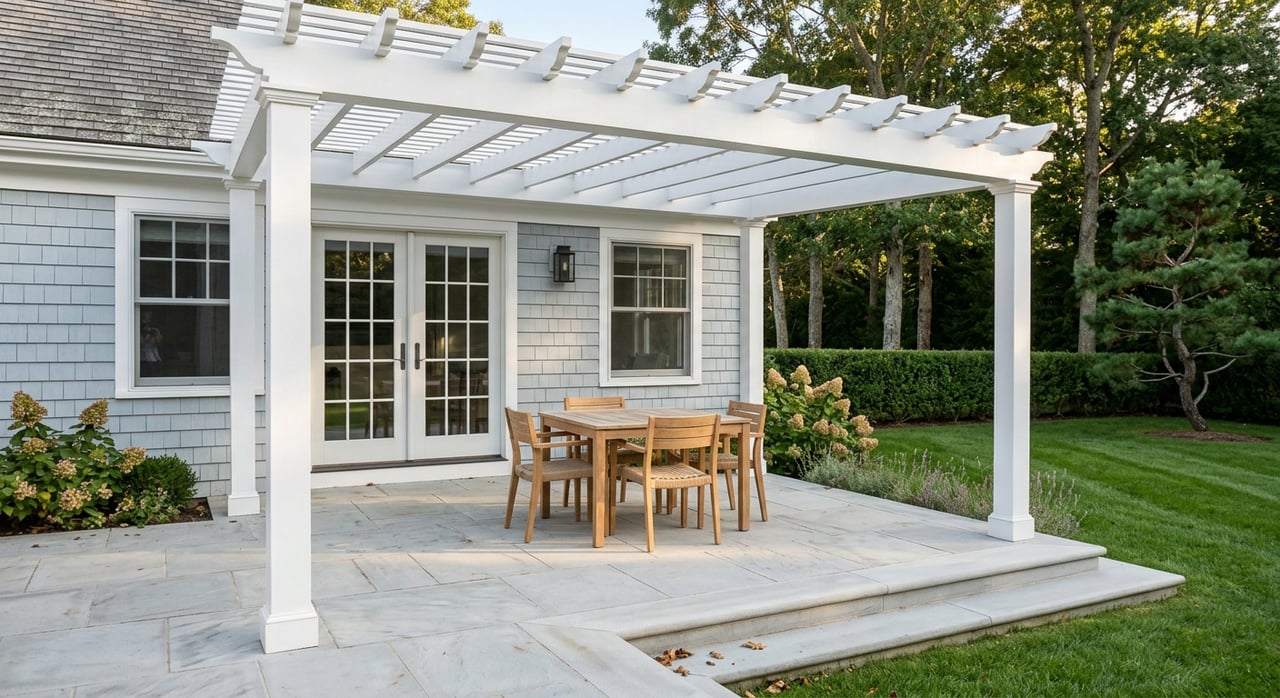
A new build typically supports the kind of living many second-home and full-time buyers want right away. Layouts often feel more open, entertaining spaces tend to be larger, and the home is usually designed with contemporary expectations in mind.
If your priority is immediate occupancy with less near-term maintenance, a new build may align well with your goals. That can be especially appealing if you want to spend more time enjoying Bridgehampton and less time planning renovations.
The tradeoff is character. A newly built house can be beautiful, functional, and thoughtfully designed, but it will not offer the same architectural pedigree as a restored farmhouse that has evolved with the hamlet over time.
Because a new build does not have existing historic fabric to work around, it usually allows more freedom in layout and amenities. Still, if you are drawn to original details, age, and a house that feels rooted in Bridgehampton’s past, modern construction may not satisfy that preference in the same way.
Historic farmhouses remain highly desirable in Bridgehampton because the hamlet’s past is still so visible. Town materials note that much of Bridgehampton’s architectural heritage remains in place, and local institutions such as the Bridgehampton Museum steward properties including the c. 1825 Corwith House and the c. 1840 Nathaniel Rogers House.
That visibility gives older homes a special appeal. When you buy a farmhouse here, you are often buying into a broader historic setting, not just a single property.
A historic farmhouse can offer something that is difficult to replicate in new construction: authenticity. Original proportions, older materials, and the relationship between the house and the surrounding streetscape can create a strong sense of place.
For buyers who care about architectural character and connection to Bridgehampton’s historic Main Street fabric, that can be a major advantage. The appeal is less about perfection and more about personality, craftsmanship, and presence.
Owning an older home does not mean you have to freeze it in time. National Park Service guidance says historic properties can be made more sustainable, energy-efficient, and resilient while preserving character.
That matters because many buyers assume an older farmhouse cannot be improved meaningfully. In reality, upgrades are often possible, but they need to be planned around the house rather than imposed on it.
Historic homes often have known performance issues in areas like air leakage around windows and doors or insulation in attics and walls. These are not unusual conditions in older houses, and they can often be addressed thoughtfully.
The same guidance notes that historic windows and doors are often repairable. With regular maintenance and tools like storm windows, thermal performance can often improve without replacing original sash.
This is where many buyers need the clearest expectations. In the Town of Southampton, the Landmarks and Historic Districts Board reviews demolition and construction permit applications for structures built before 1941 or for recognized historic resources, and it can issue Certificates of Appropriateness.
That means exterior work on an older house may involve an added layer of review, even if the property is not in a formally adopted village historic district. If you are considering a farmhouse, the process matters almost as much as the architecture.
Renovating a historic farmhouse often requires more planning up front. Choices involving exterior materials, windows, doors, massing, or demolition may need closer review than they would in a newer property.
The Secretary of the Interior’s Standards also emphasize that rehabilitation decisions depend on significance, condition, documentation, and economic and technical feasibility. In simple terms, the right approach depends on the house itself, not just your wish list.
In Bridgehampton, the choice often comes down to how you want to live. While every buyer is different, the local code, preservation, and market context make a few patterns easier to see.
Neither path is automatically better. The right answer depends on whether you value convenience first, character first, or a thoughtful mix of both.
Bridgehampton’s resale market is high-end, but it is also relatively small, which means headline pricing can move sharply. Douglas Elliman and Miller Samuel reported a Q3 2025 Bridgehampton median sales price of $6.81 million across 15 sales, after a Q2 2025 median of $2.795 million across 23 sales.
That swing is a useful reminder. In a market with fewer transactions, a small number of large sales can shift the median quickly.
For buyers and sellers, that means broad averages only tell part of the story. Whether a new build or historic farmhouse performs better at resale can depend heavily on the specific house, its condition, its location within Bridgehampton, and how well it matches current buyer demand.
Before you commit to either type of property, it helps to clarify the review process early. For older or historically recognized homes, the first calls should be to the Town of Southampton building department and the Landmarks and Historic Districts Board.
You should also confirm whether a property sits inside, adjacent to, or within the study area of the Town’s proposed Bridgehampton historic-district materials before planning exterior changes. That step can save time, money, and frustration later.
If you want a home that feels effortless from day one, a new build may be the clearer fit. If you want history, texture, and a house with a stronger connection to Bridgehampton’s architectural identity, a farmhouse may be worth the added planning and upkeep.
Many buyers are not deciding between good and bad options. They are deciding between convenience and character, between blank-slate functionality and inherited charm. In Bridgehampton, both can be compelling, but they ask different things of you as an owner.
If you want help comparing specific Bridgehampton properties, understanding local market positioning, or evaluating how a home may fit your long-term plans, the Hamptons Privé Team can help you navigate the choice with clear local insight.
Stay up to date on the latest real estate trends.
David is relationship-driven with all his customers and business contacts and understands that being honest every step of the way is the only way to conduct business. As a result, his reputation in the industry is simply stellar. David is always energized at the idea of selling his clients’ homes with Brown Harris Stevens’ award-winning marketing and technology.