Reading Sagaponack’s Landscape As A Buyer
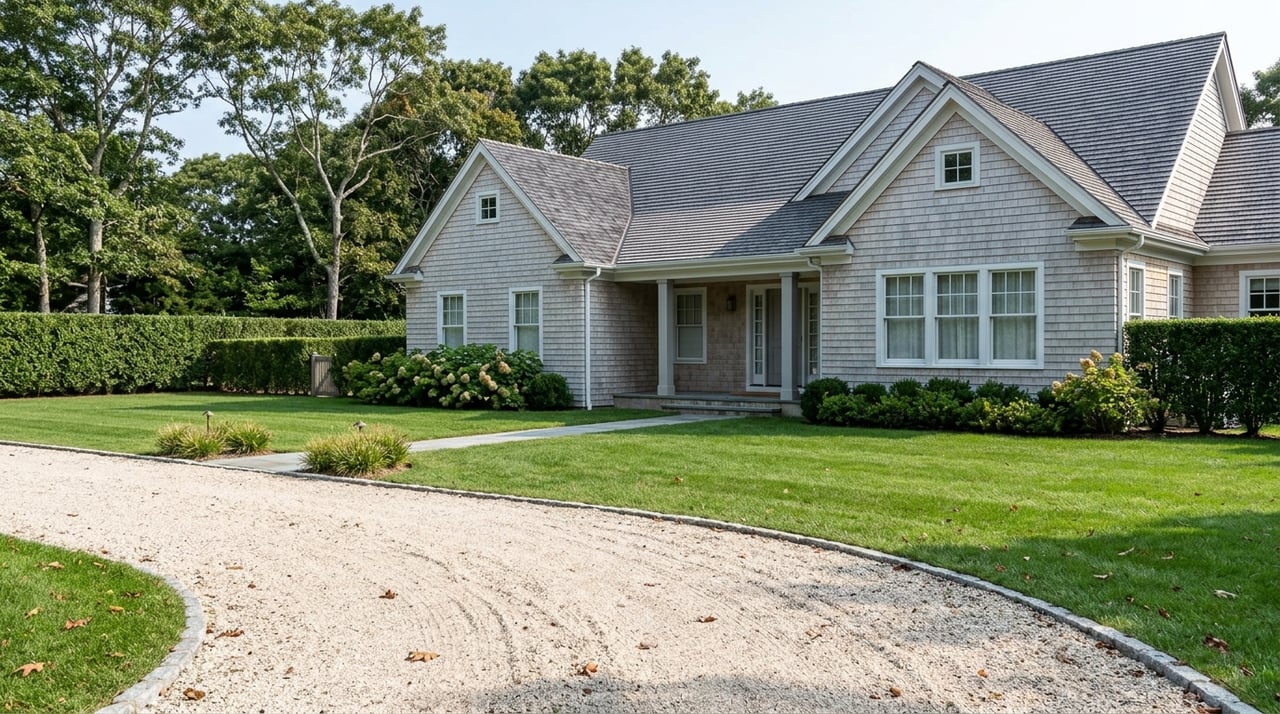
If you are shopping in Sagaponack, you are not just buying a house. You are buying into a landscape pattern that shapes privacy, views, future development, and long-term ownership costs. In a village this small and carefully structured, understanding the land can help you make a smarter, more confident purchase. Let’s dive in.
Sagaponack is an incorporated village in the Town of Southampton, positioned between Bridgehampton and Wainscott. The village describes itself as 4.56 square miles with about 350 year-round residents and more than 1,000 part-time residents. That small scale helps explain why the landscape feels like the main amenity, not just a setting around it.
Official village maps show the Atlantic Ocean along the southern edge, along with Sagaponack Lake, Poxabogue Pond, Fairfield Pond, Parsonage Pond, and Peters Pond inland. The village also publishes maps for preserved open space, New York State Agricultural District #5, and zoning districts including R40, R80, R120, OSC, and agricultural planned-development areas. For you as a buyer, that means land use here is formal, visible, and central to value.
In many markets, buyers focus first on nearby retail or a lively center. In Sagaponack, value often comes from something else: acreage, privacy, road setbacks, open sightlines, and proximity to land that is likely to remain open. The village’s own planning materials support that view.
An official buildout appendix estimates 942 total parcels in the village, with 826 potential parcels for single-family residential use and 354 total potential parcels for new single-family residential use under current zoning. By contrast, the village’s commercial appendix identifies only eight commercial-use parcels totaling 15 acres. That imbalance helps explain why Sagaponack reads as landscape-first rather than commerce-first.
When you tour a property, try to separate a beautiful view from a durable one. A field, pond edge, or open stretch across the street may look permanent, but its staying power often depends on preservation status, zoning, or agricultural use.
That distinction matters in Sagaponack. The village’s preserved-open-space framework and agricultural districts suggest that some view corridors are backed by formal land controls, not just chance. In resale terms, that can create a stronger story than scenery alone.
The village’s agricultural fence application offers a useful clue about how scenic conditions are managed. It instructs applicants to avoid blocking road-front scenic vistas, keep road-front fencing clear of vegetation, place gates away from road frontage when possible, and remove fencing if the field is no longer farmed after two years.
For a buyer, the lesson is simple. If you love a farm view, ask what supports it. Active farming, preservation status, and village review may all affect whether that outlook stays as open as it appears today.
Sagaponack stands apart from some nearby South Fork locations because it has such a limited commercial footprint. Southampton Town planning materials note that commercial corridors in the broader town are concentrated mainly along County Road 39 and Montauk Highway, while the road network is characterized by narrow rural roads that move through open space, agricultural fields, and residential areas. The same town materials describe the area as automobile-dependent.
That larger context helps you compare Sagaponack with places such as Water Mill or Bridgehampton. Southampton Town’s Water Mill profile points to a commercial corridor with eateries, a post office, a museum, and an antique store, and the town also maintains official hamlet-center planning documents for Bridgehampton and Water Mill. Sagaponack, by contrast, is defined more by scenic preservation, agriculture, and low-density land use than by a visible center.
This does not make Sagaponack better or worse than nearby hamlets. It just means the buying decision is different. If you prioritize horizon lines, privacy, and confidence in the surrounding land pattern, Sagaponack may fit you especially well.
If your daily routine depends on being close to a stronger retail core, you will want to weigh that carefully. In Sagaponack, the draw is often the feeling that the land itself has structure and restraint. For many buyers, that is exactly the point.
A beautiful setting should never stop you from asking practical questions. In Sagaponack, some of the most important ones involve beach access, erosion, flood exposure, and future building potential. These details can affect both enjoyment and carrying costs.
Beach proximity is a major lifestyle draw, but it comes with operational realities. The Town of Southampton’s 2026 beach-parking page lists Sagg Main Beach in Sagaponack as a location that uses the daily parking app. That is useful to know if beach convenience is part of your purchase criteria.
Just as important, the town announced in January 2025 that an oceanfront renourishment project would begin in the eastern section of Sagaponack and move westward. The town’s erosion-control FAQ for Bridgehampton and Sagaponack states that these beaches have been losing 125,000 cubic yards of sand per year for 20 years. It also notes that dune loss in Sagaponack had exposed mainland soils at Gibson Lane.
If you are considering an oceanfront or near-ocean purchase, think beyond the asking price. The same erosion-control FAQ says the Sagaponack district project cost was proposed at $13,364,500, with the Sagaponack allocation formula based on a combination of waterfront footage and assessed value.
That does not mean you should avoid coastal property. It means you should evaluate ownership with a long lens. In Sagaponack, shoreline conditions and related costs are part of the buying picture.
If you are thinking about adding onto a home, rebuilding, or creating a more customized estate, flood and permitting constraints matter early. Sagaponack’s official FEMA page links to the FEMA Flood Insurance Map and FEMA Zone Height Regulations. Those tools can help you understand whether a parcel may carry additional design or insurance considerations.
The village also makes clear that several local boards play a role in project review. According to the village boards page, the Planning Board reviews site plans, subdivisions, and special exception applications, while the Zoning Board and Architectural and Historic Review Board handle zoning and design review. Before you assume a parcel can support your future vision, confirm what the local review path may involve.
When you walk a Sagaponack listing, try to read it as both a home and a piece of land. The house matters, of course, but so do the layers around it. A well-informed buyer looks at the setting almost like a second structure.
Here are a few smart questions to ask as you evaluate a property:
The biggest mistake buyers make in a place like Sagaponack is treating beauty as static. In reality, the strongest purchases are often the ones where the beauty is reinforced by zoning, preservation, agricultural use, or coastal position. That is what can make a view feel more durable over time.
In that sense, Sagaponack rewards careful reading. If you understand how the village is laid out, how land is protected, and where costs may show up later, you can buy with much more clarity.
Sagaponack is one of those rare markets where the landscape is not just part of the story. It is the story. If you want help evaluating a property’s setting, future flexibility, and long-term value, Hamptons Privé Team can help you read the details with confidence.
Stay up to date on the latest real estate trends.
David is relationship-driven with all his customers and business contacts and understands that being honest every step of the way is the only way to conduct business. As a result, his reputation in the industry is simply stellar. David is always energized at the idea of selling his clients’ homes with Brown Harris Stevens’ award-winning marketing and technology.